
Browse Hazleton City Directory Collections
The Luzerne County Historical Society is the clearest verified shelf for Hazleton city directories. Its research description reports a collection running from 1871 through 2004. These are alphabetical household listings, and a volume may supply a head of household, spouse, occupation, work address, home address, widow notation, and sometimes a street index. The reported span is a collection range, not proof that every year survives or that each book has the same features. Ask for the precise Hazleton or West Hazleton volume before a visit or a research order.
| Hazleton collection | Verified coverage | Holding institution | How to use it |
|---|---|---|---|
| LCHS household-directory collection | 1871-2004 | Luzerne County Historical Society | In-person research or research service; confirm the year and street-index feature. |
| Williams and Polk examples | Williams: 1901-02, 1903-04, 1909, 1912; Polk: 1914-18, 1921-30 | Institutional shelves and historical-journal evidence | Verified publisher examples, not a complete issue list. |
| Telephone directories | 1947-1961 material, including a digitized Jan. 1953-Apr. 1961 run | Library of Congress | Compare a telephone-era address or number; it is not proof of every occupant. |
| Newspaper and census companions | Source-specific historical runs | Hazleton Area Public Library and LCHS | Use a narrow name and date range to test a directory finding. |
The LCHS research-source listing also identifies maps, newspapers, census indexes, surname files, manuscript material, photographs, and mine reports. Those holdings help when a directory gives only a short line. LCHS notes that its newspaper material can be viewed digitally at the Society's library through a subscription service, while the run itself remains incomplete. A missing search hit should therefore be treated as a gap in a source, not a final answer about a Hazleton household.
The LCHS institutional holdings overview is useful before arranging a dated request.
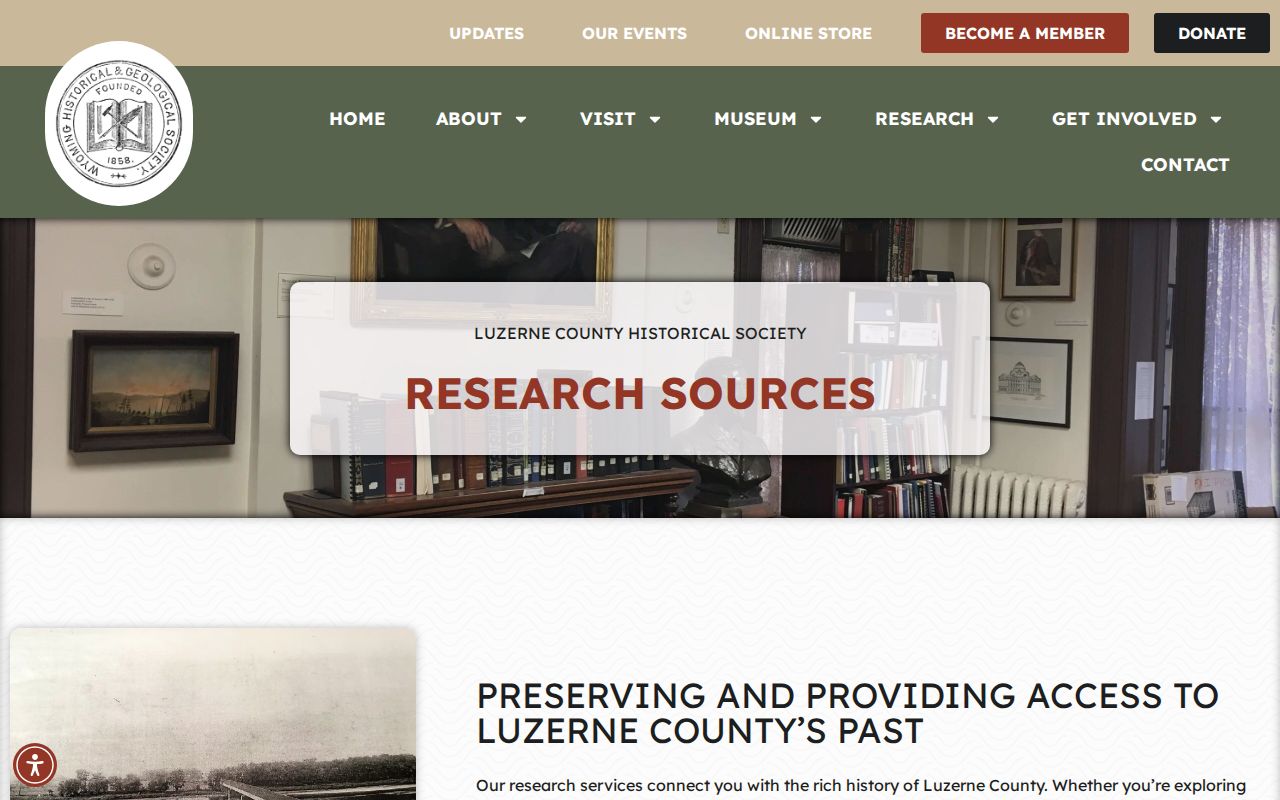
Use the collection description to frame a narrow request for a directory, map, newspaper, or census item that can corroborate a Hazleton entry.
Hazleton Directory Year Runs
The directory shelf has a long range, but it is not one continuous publisher series. Verified examples include Williams' Directory of Hazleton & West Hazleton for 1901-02, 1903-04, 1909, and 1912. R. L. Polk & Co.'s Hazleton City Directory is documented for 1914-18 and 1921-30. Those titles are useful when requesting a particular book, yet they do not fill unverified years between the examples. Record the cover title, publication year, and page when making a historical note.
Dates need close reading. A directory printed in a named year can describe information gathered earlier. A household that appears in the 1912 volume may have moved by the time the book reached readers. The 1947-61 telephone material and the historical-society directories create separate date anchors rather than a seamless roster. Where a question is about a building, the 1891, 1895, 1909, 1946, and 1955-revision Sanborn maps can provide a second date point for the block and structure.
Note: Keep the volume year and the period described by its publisher together in research notes, because they may not be identical.
Hazleton Directory Research Counters
Hazleton Area Public Library is a practical first local counter for a narrowly dated directory or a Standard-Speaker lead. The main library is at 55 N. Church Street and lists 570-454-2961 as its main phone. Its organization began in 1872, the first public library opened in 1907, and the current Church and Maple location opened in 1969. The library's local role is valuable, but an authoritative public inventory of every directory year was not found. Call first to ask whether a specific volume or microfilm date can be consulted.
For the broader regional shelf, turn to LCHS in Wilkes-Barre. It offers in-person research and a research/document-order path for directories, newspapers, maps, deeds, obituaries, photos, and related material. The Greater Hazleton Historical Society is another named local genealogy resource, especially for the Church Street historic district, but no complete public city-directory list or reverse-directory run was verified there. A careful request names the person, possible name variants, approximate year, municipality, and record type.
The Hazleton Area Public Library branch page confirms the local library system and contact point.
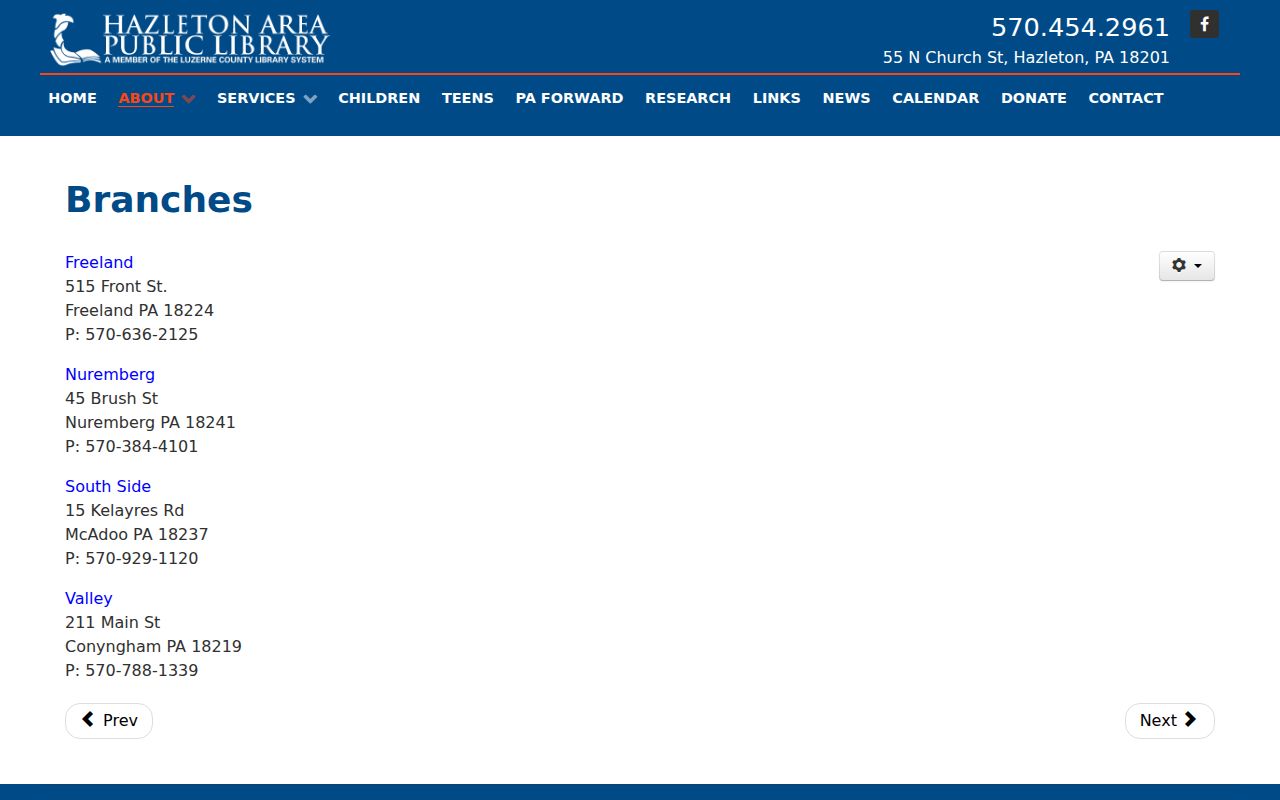
The library is a useful starting counter when a printed directory year or a local newspaper date needs to be located before expanding the search.
Municipal files form a separate route. The Hazleton Open Records Office receives written requests for existing City records such as council actions, permits, inspections, code files, and planning material. It does not maintain a broad historical household index. The City specifically routes deeds, property-tax information, marriage records, divorce decrees, and state vital records to their separate custodians, so a targeted City request should not be used as a substitute for the directory shelf.
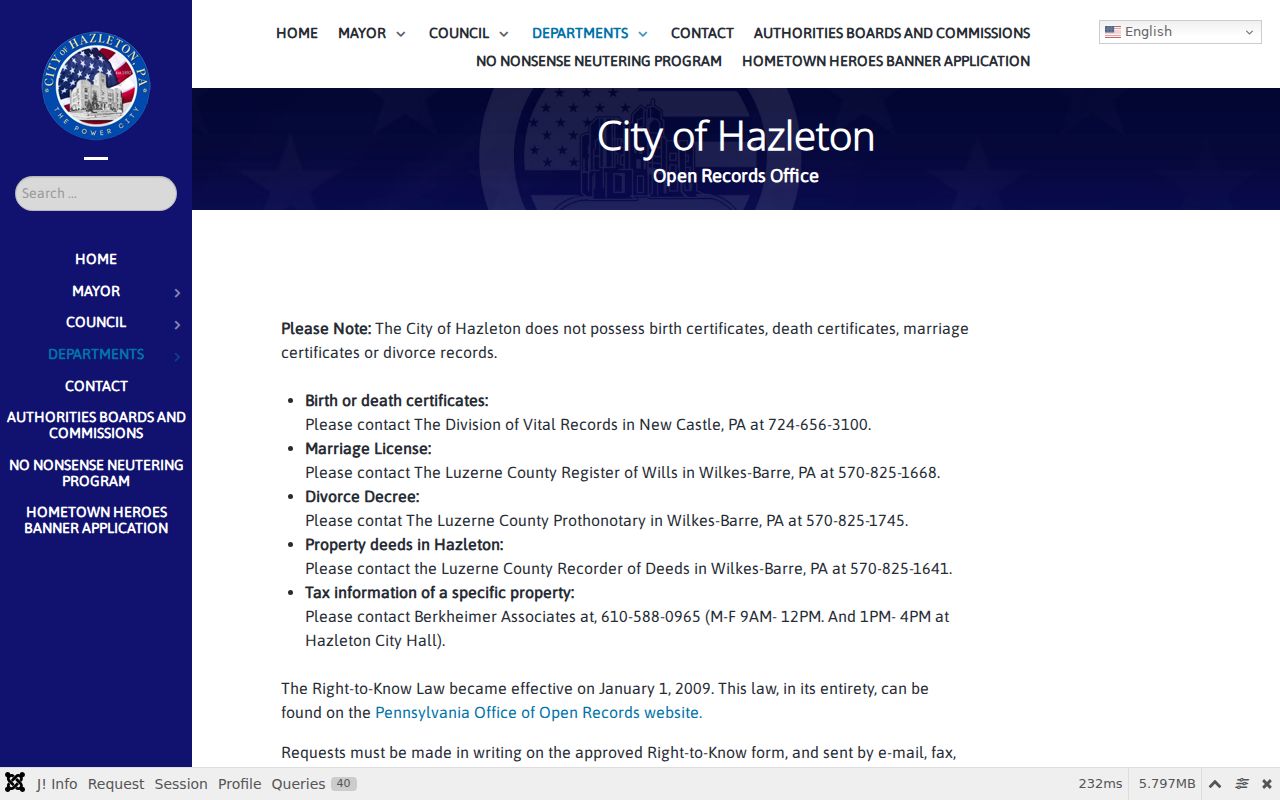
When a directory address points to a specific municipal event or building change, request that defined City record by address and date instead of asking for a resident list.
Note: When contacting a holding institution, lead with a year and volume request because a broad request can miss the best collection.
Reading Hazleton Directory Entries
A historical directory entry is a compact clue, not a biography. The LCHS description supports looking for the name, spouse or widow notation, occupation, work location when printed, home address, and any street index. A primary transcription used during research showed a surname and given name, occupation, an abbreviated ownership or residence marker, a rear-address notation, and a West Hazleton qualifier. That example helps identify the types of fields to transcribe, but each book's own key controls the meaning of its abbreviations.
| Name line | Copy the spelling, initials, suffixes, spouse or widow notation, and any variant exactly as printed. |
|---|---|
| Occupation field | Record the abbreviated occupation and work location where present; it can help distinguish two people with the same name. |
| Residence clue | Preserve the house number, street, ward or municipality, and any rear or room notation. |
| Tenure mark | Transcribe any ownership or household-status mark only after checking that volume's abbreviation key. |
| Street index | If the volume contains one, note the street, number, and listed householder; do not assume every volume has it. |
| Edition details | Keep the cover title, publication date, information-date note, and page together with the entry. |
- Criss-cross directory
- A reverse arrangement that lists addresses or streets before names. No authoritative Hazleton run was confirmed, so ask whether the particular volume has a street index.
- Householder index
- An arrangement that points from a household or address clue to the named entry. Its form varies by publisher and year.
- Abbreviation key
- The legend printed in a volume that explains its letter marks. Photograph or transcribe it before interpreting an entry.
Hazleton and West Hazleton should not be collapsed into one place merely because a street name looks familiar. The research notes that municipality qualifiers can be material, and a West Hazleton mark belongs in the citation. Spelling variants, initials, and changed forms of a given name are common historical search issues. Anchor a possible match with an address, a household detail, a census entry, or a recorded party role before treating it as the same person.
Hazleton Directories With Maps
A directory can place a household on a street, while a map can explain the block around it. Library of Congress Sanborn material covers Hazleton editions from 1891, 1895, and 1909, plus a 1946 volume and a 1955 revision. The 1946 item has 69 sheets. These insurance maps show streets, building footprints, and building use. They do not prove that a named person lived in a structure, so pair them with a directory volume, deed description, census record, or newspaper notice from a close date.
Hazleton's compact geography makes municipal identity important. A postal city name can cross a nearby borough or township line, and the research specifically warns that East Shoemaker Street can have duplicate 1-100 numbering in Hazleton City and West Hazleton Borough. Use the municipality printed in the directory, then compare the map and the address with care. That small check prevents a family trail from jumping to a similarly numbered but different place.
Trace Hazleton Directory Households
A good household trail moves through nearby years rather than leaping from one name result to a conclusion. Begin with the nearest LCHS Hazleton or West Hazleton volume, then follow the same name or address both backward and forward. Write down the page, spelling, address, occupation, spouse or widow notation, and any marker before moving to another source. A move can be real, but an address difference can also reflect a municipality qualifier, a printing delay, or a changed street description.
- Choose a known name, address, or approximate year and request the nearest local directory volume.
- Transcribe the full entry and its page, including name variants and the volume's own abbreviation key.
- Check the closest earlier and later volume. If a street index exists, inspect the address line for that period.
- Pair the directory date with the nearest federal census, which is publicly available through 1950, to test the household at a census point.
- Use HAPL or LCHS newspaper microfilm for a narrow surname and date search when a move, death, notice, or organization reference needs support.
- End a historical trail with a recorded estate, lawfully available death record, probate item, or confirmed church or cemetery source when one is available.
Directories are strongest in the gaps between censuses. A census records a household on one official date, while a directory can add an annual address or occupation clue. If a person disappears, do not infer a single cause. The person may have moved, died, been omitted, or appeared under a different spelling. An estate file, obituary, or later directory can distinguish those possibilities without turning a historical search into a claim about a current location.
For a modern property chain after the historical years, use the county's address-keyed records rather than trying to extend the city-directory shelf beyond its proven coverage. The historical collection gives the dated household layer; county records provide a different kind of evidence.
Hazleton Directory Newspaper Checks
Newspapers can test the details surrounding a Hazleton directory entry. HAPL reports Standard-Speaker microfilm beginning in the early 1900s, though the run is incomplete and the current paper is retained for one year. LCHS reports early-1800s through 1949 newspaper microfilm, including the Hazleton Sentinel and Hazleton Plain Speaker, also with incomplete coverage. Search a small date range and a surname variant instead of assuming that one absent result disproves a directory line.
The LCHS research page makes one useful exclusion clear: the Wilkes-Barre Record death compilation for 1886-1962 does not cover the Hazleton region. That boundary helps avoid a false negative. Local obituary publishers may offer their own notices, but no comprehensive municipal cemetery locator or full Hazleton obituary index was verified. Treat each newspaper, funeral notice, cemetery record, and directory volume as a source with its own date and reach.
Note: A newspaper notice can corroborate a name or address, but it should be cited with its issue date and not treated as a complete household record.
Hazleton Directory Date Checks
The long directory span is one of Hazleton's strongest historical research assets, but the date sequence still needs source-by-source checks. The local collection begins in 1871, after the county's deed trail was already established, and it reaches into the 2000s. The city charter date of December 4, 1891 offers useful local context for turn-of-the-century volumes. Coal-era growth and migration also make exact spelling, initials, and municipal labels especially important when comparing a directory entry with a census, deed, or newspaper.
| 1871 | Beginning of the LCHS-reported city-directory collection span. |
|---|---|
| 1901-1912 | Verified Williams directory examples for Hazleton and West Hazleton. |
| 1914-1930 | Verified Polk directory examples, with a documented gap between the listed series. |
| 1947-1961 | Library of Congress telephone-directory material supplies a separate address-and-telephone comparison layer. |
| 2004 | End of the reported LCHS city-directory collection range, not a verified claim about the last printed edition. |
Ask the holding institution for the actual cover and inside title page before relying on any year label. That simple step preserves the difference between a surviving library copy, a documented publisher example, and a date inferred from another record. It also makes a Hazleton historical-directory trail useful for family history, estate research, or reconnecting with a dated household without overstating what a historical volume can prove.